History
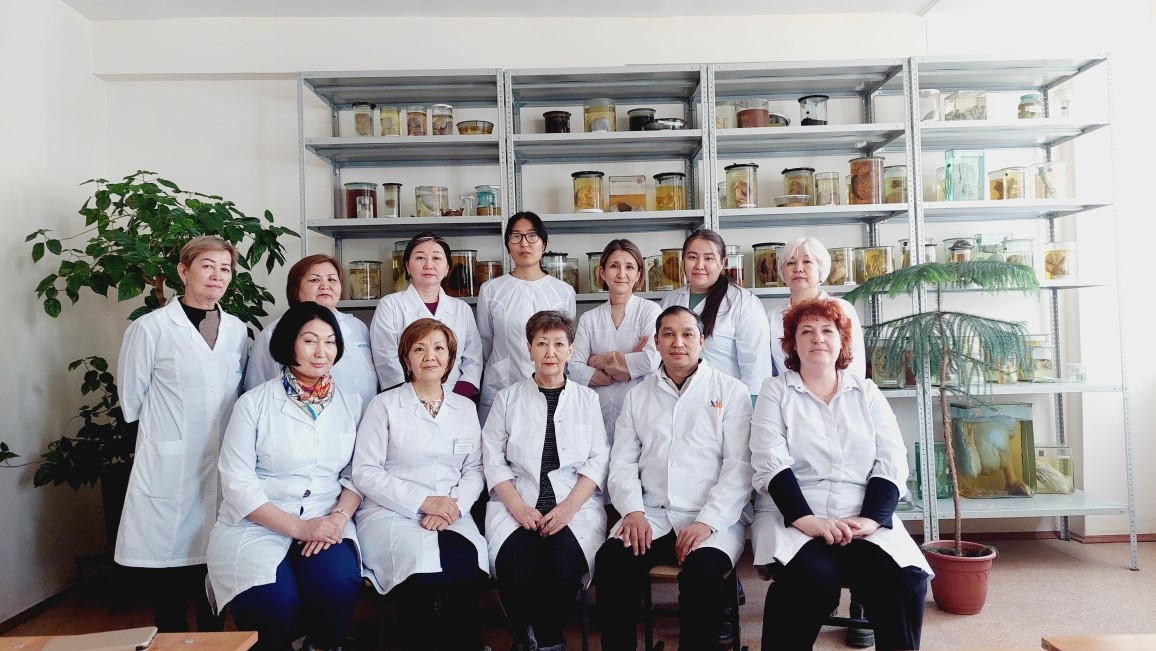
The Department of Pathological Anatomy at Astana Medical University was established in August 1965 as part of the Tselinograd State Medical Institute. Since its founding, the staff of the Department of Pathological Anatomy, under the leadership of Boris Moiseevich Shapiro, PhD, Associate Professor, have been working to organize the work of pathologists in Tselinograd and the Tselinograd Region by establishing a centralized, unified dissection center within the department. At the same time, scientific research was conducted in collaboration with clinical departments and representatives of practical healthcare.
Over the years, the following have headed the Department of Pathological Anatomy: Boris Moiseevich Shapiro, PhD, Associate Professor; Alexander Varfalomeevich Braun, PhD, Associate Professor; Mikhail Assirovich Kornitsky, DSc, Professor; Alibek Mendybaevich Ramazanov, PhD, Associate Professor; and Saule Nurgalievna Kadyrova, DSc, Professor. Since 2005, the department has been headed by Doctor of Medical Sciences, Professor Kenzhekyz Boranbaevna Manekenova.
Goals:
- training highly qualified personnel for national healthcare and medical science;
- dissemination and application of knowledge in pathological anatomy in the training of pathologists, residents, and research staff;
- providing highly qualified diagnostic care to the public and healthcare organizations within the framework of pathomorphological diagnostics.
Activities:
The department's main activities include educational, methodological, clinical, and research work.
Objectives
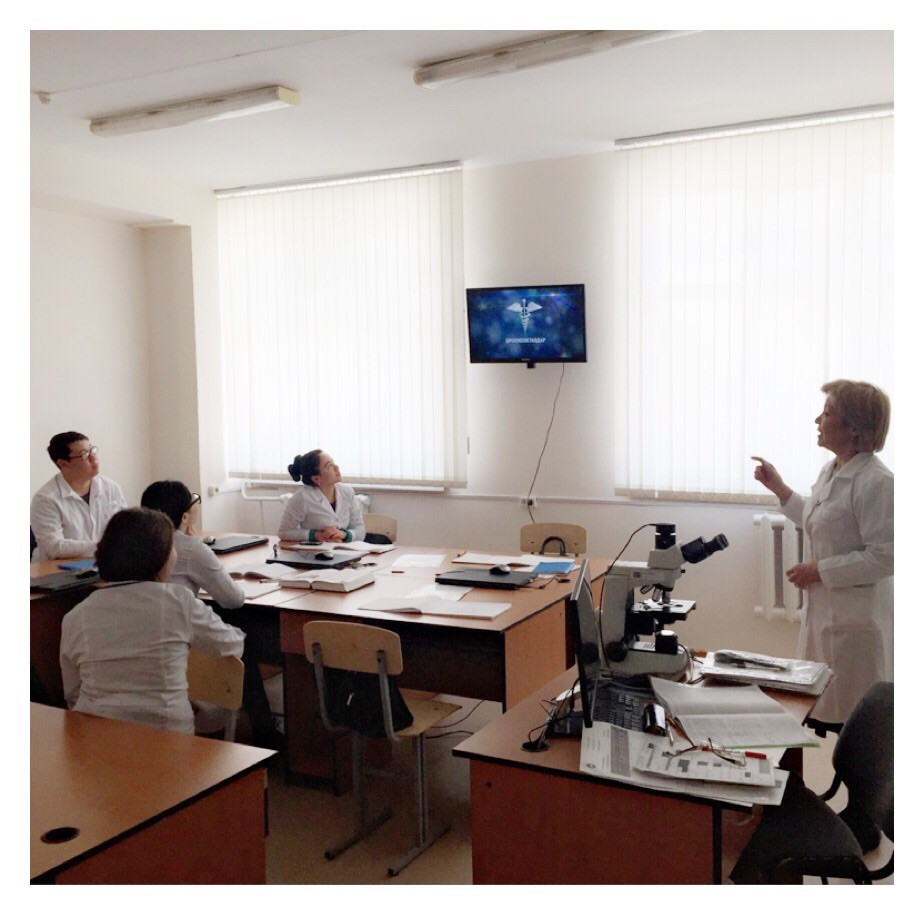
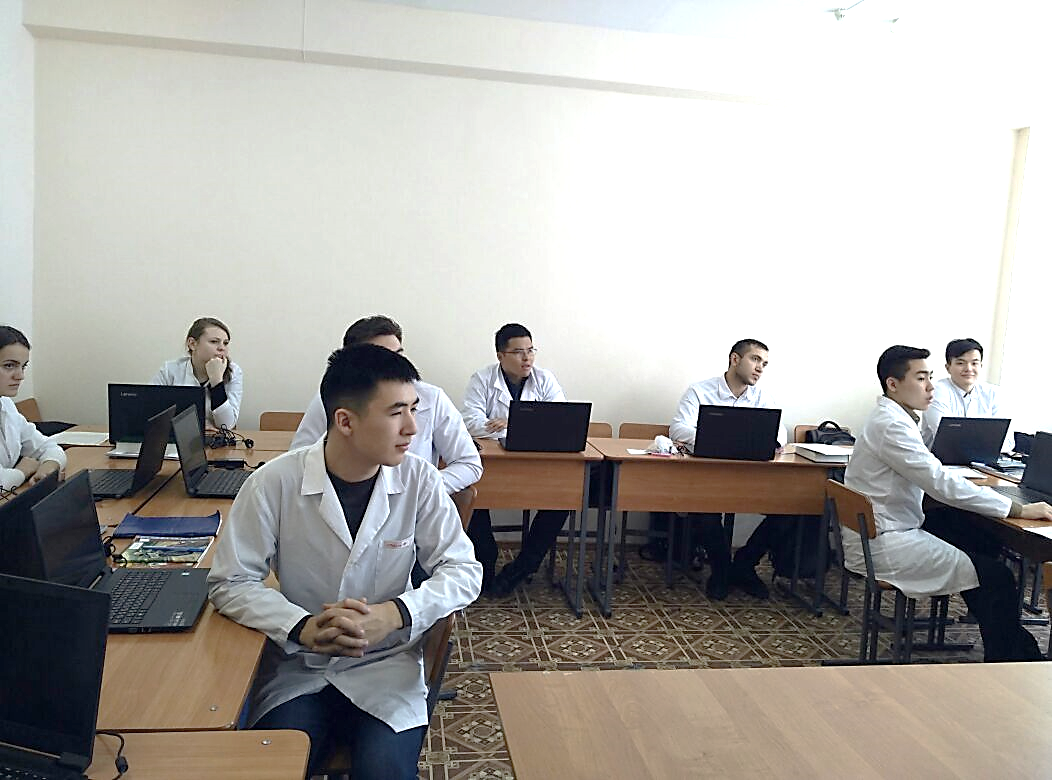
Conducting practical classes outlined in the clinical curriculum and based on state standards;
Developing teaching and methodological materials for students and faculty;
Training research staff through master's and doctoral programs and specialized staff through residency; engaging students in research.
Ongoing clinical work to provide highly qualified diagnostic care to the public and healthcare organizations through pathomorphological diagnostics.
Functions
Implementation of state educational programs for higher professional and postgraduate education in the department's specialization;
Development of course curricula in the department's specialization;
Provision of comprehensive educational, methodological, and organizational support for the educational process in the department's specialization;
Development and use of modern educational technologies and teaching methods that enhance student learning.
Educational activities
- monitoring feedback;
- implementing University plans;
- achieving departmental quality goals.
Achievements:
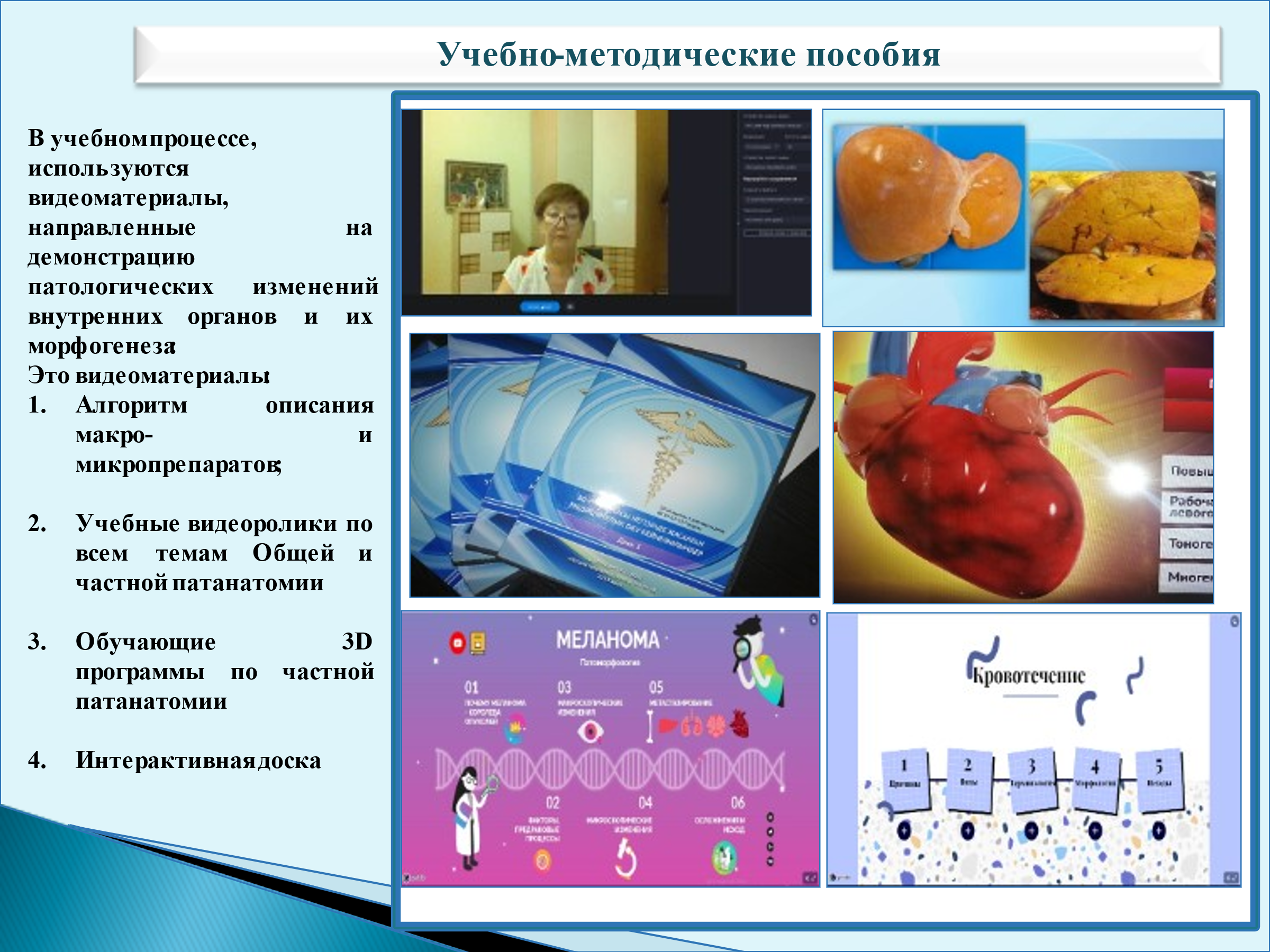
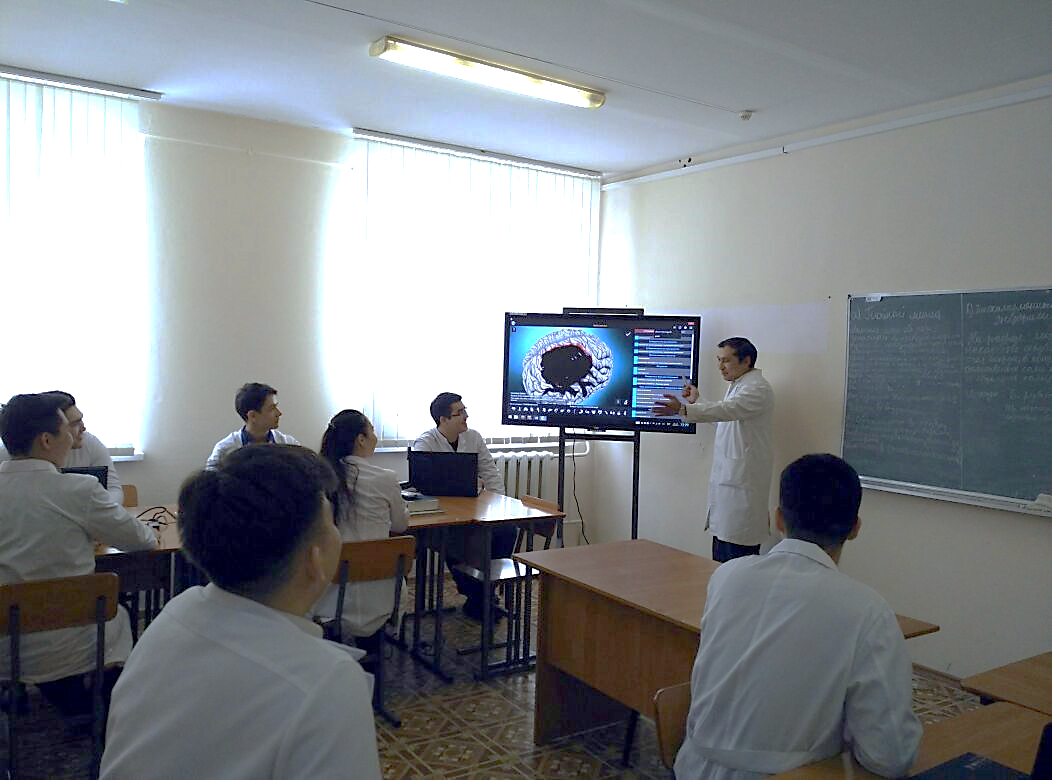
Multimedia teaching technologies have been integrated into the educational process, using our own developments in the form of educational videos on all topics of general and specific pathological anatomy; the "Interactive Whiteboard" method for specific topics in the pathological anatomy course; and a video algorithm for describing macroscopic and microscopic signs of internal organ pathology.
The department provides extensive diagnostic and advisory assistance to practicing pathologists in Astana and other regions of the Republic of Kazakhstan, as well as to the Republican Center for Forensic Medical Examination; and conducts expert assessments of the quality of treatment and diagnostic procedures.
A number of standards and regulations have been developed for the organization of the pathological anatomy service of the Republic of Kazakhstan.
Over the past five years, five dissertations for the academic degree of Master of Arts in the specialty 6M110100 – Medicine, and one dissertation for the academic degree of Doctor of Sciences in the specialty 6M110100 – Medicine (jointly with the Department of Pediatric Surgery) have been defended.
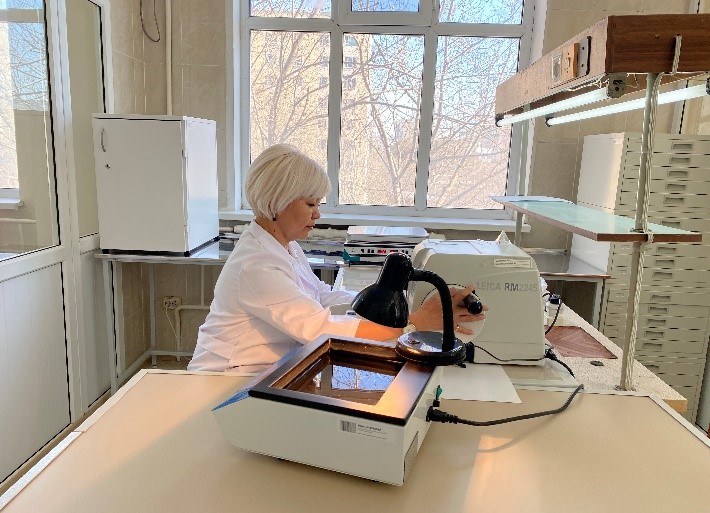
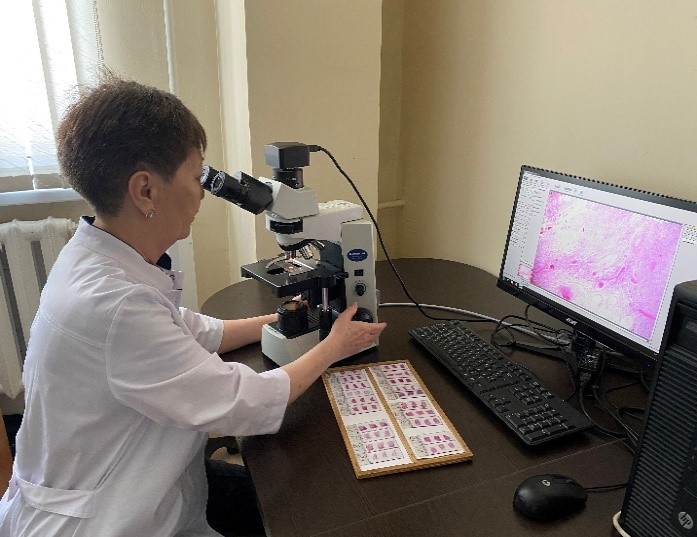
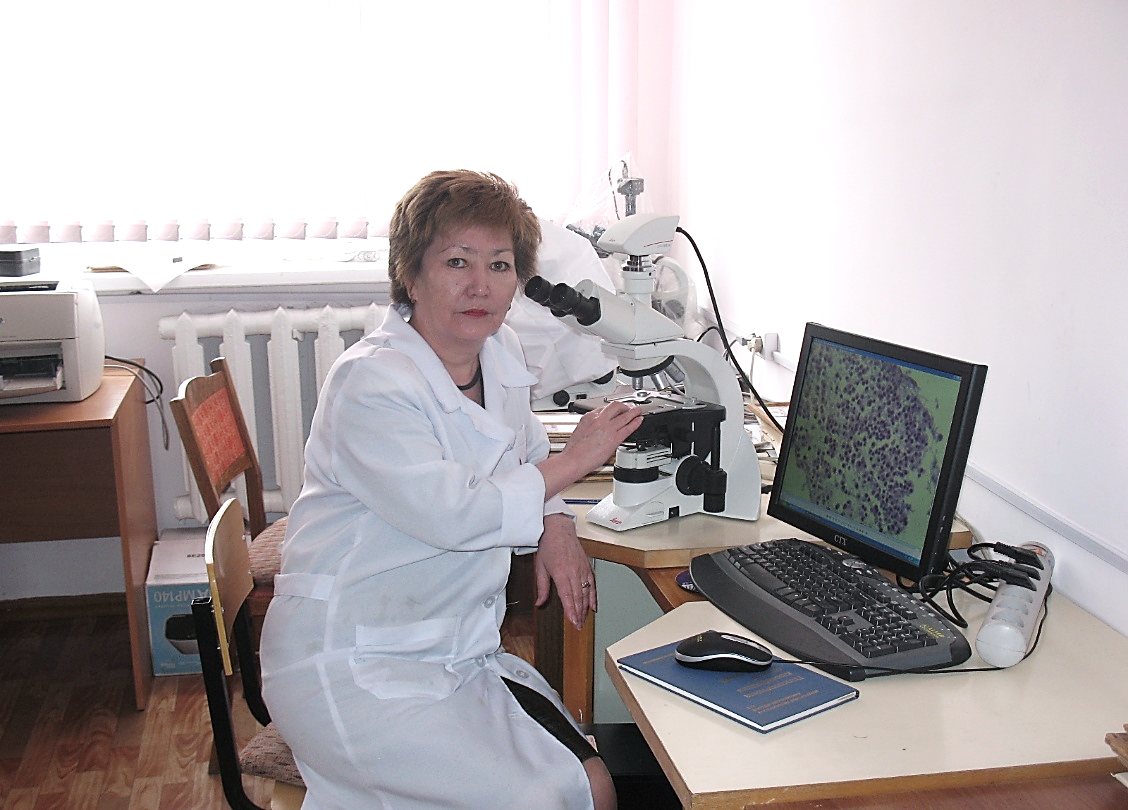
The department's pathohistology laboratory performs pathohistological processing of clinical, scientific-clinical, and experimental material from the faculty members of the Astana Medical University (AMU) departments, followed by microscopy, morphometry, and archiving of the scientific material.
Contacts:
Astana, Beibitshilik Street 53, 4th floor.