|
60+
years of academic tradition
|
270+
scientific publications
|
7
WoS articles per year
|
1st
AMU performance ranking
|
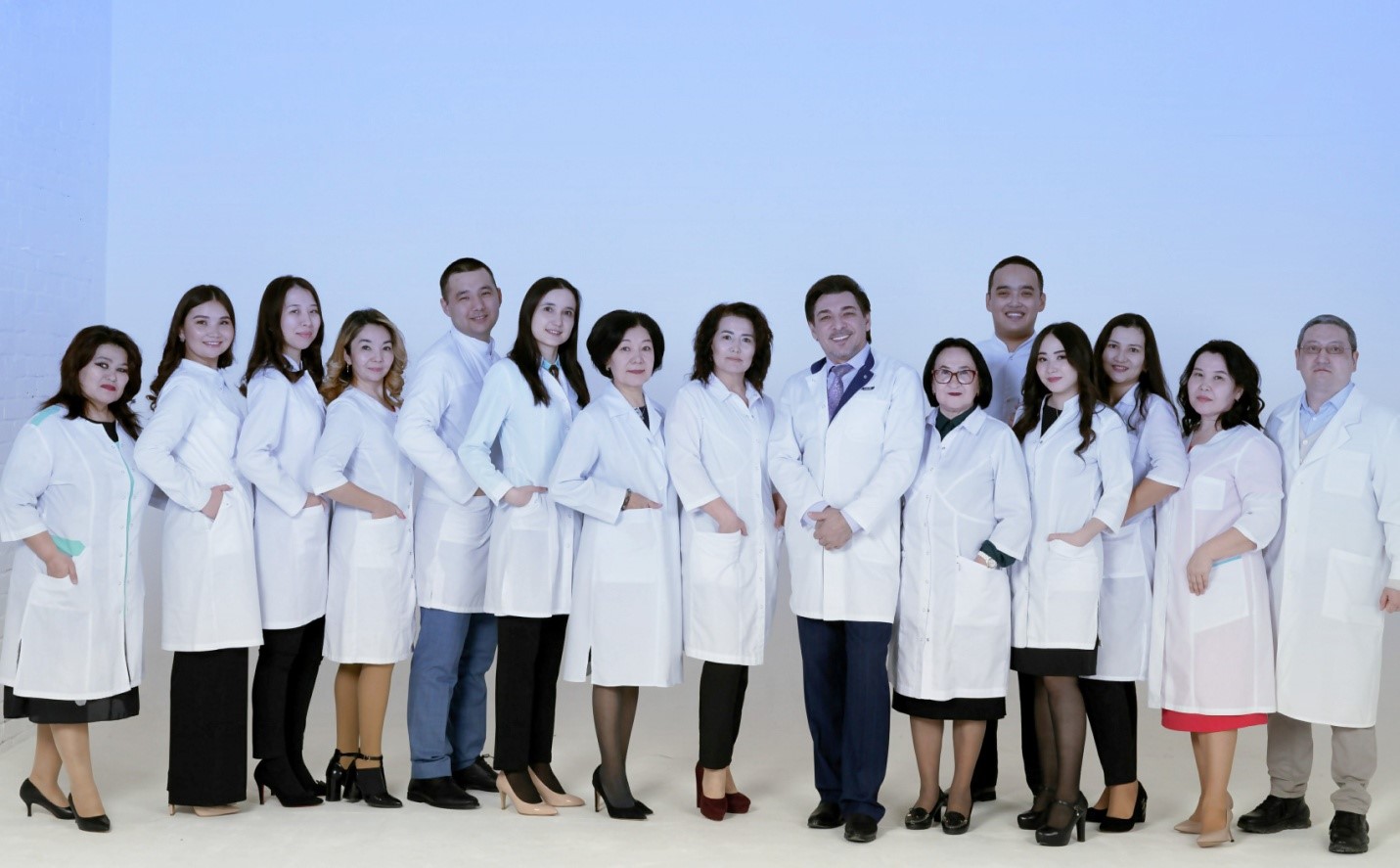
The Department of Normal Physiology is the cornerstone of medical education at JSC "AMU". It is here that students develop an understanding of the living organism as an integrated system, acquiring competencies in clinical reasoning and research culture. Our mission is to train physicians who do not merely treat — but think.
The Department was established in 1964 alongside the founding of the Tselinograd State Medical Institute, with Professor A.I. Zakharova as its first head. Her successors — E.V. Gurova, N.F. Shin, L.Z. Tel, A.A. Abilkasimov — each contributed substantially to the development of the department's academic and research potential.
Professor N.F. Shin established an experimental laboratory for classical physiological surgeries on laboratory animals. The tenure of Professor L.Z. Tel saw a dramatic rise in publication output, the creation of the university's first computer-based knowledge testing classroom, and the introduction of the Student Health Passport — a precursor to modern preventive screening. Under the thematic programme "Extreme and Terminal States", more than 15 Candidate of Medical Sciences dissertations were defended and over 300 scientific articles published.
Professor A.A. Abilkasimov and his academic cohort investigated the combined effects of stressors including noise, vibration, hypothermia, and immobilisation — yielding more than 10 doctoral and candidate dissertations. The scientific school founded by Tel and Abilkasimov continues to flourish under Professor K.M. Khamchiyev, who has unified the study of extreme states and combined stress into a single comprehensive research programme.
Teaching is delivered across the following specialities: General Medicine, Dentistry, Paediatrics, Nursing, Pharmacy, and Public Health. The proportion of academically qualified teaching staff stands at 65%. All faculty undergo annual professional development in their field, innovative teaching methods, and foreign language proficiency (IELTS, upper-intermediate level).
Student-centred teaching technologies are systematically employed:
The department's primary research focus — the effect of combined stress on the physiological functions of organs and systems — has been pursued over several decades. In the past three years alone, faculty have presented at more than 30 international conferences and published over 120 scientific and methodological works in journals indexed in Web of Science and Scopus.
Academic mobility extends to universities in Tajikistan, Kyrgyzstan, Voronezh, and Samarkand. Professor K.M. Khamchiyev heads the International Community "Physiology Without Borders", uniting Kazakhstan, Russia, Uzbekistan, Kyrgyzstan, Tajikistan, and China. A joint expedition to the Pamir Mountains is being planned with Tajik State Medical University as part of the comparative study "Effect of High-Altitude vs. Steppe Terrain on Physiological Functions".
The department systematically carries out patriotic and moral education: five teaching aids recommended by the Ministry of Education and Science of Kazakhstan have been published in Kazakh and Russian. Active use is made of Instagram (@physiology_amu), the YouTube channel "Moi and AMU", and Facebook. An augmented-reality display board and the "Fiziologiyanyng Zhuyriktteri" gallery (25 top students, refreshed every semester) create a motivating academic environment.