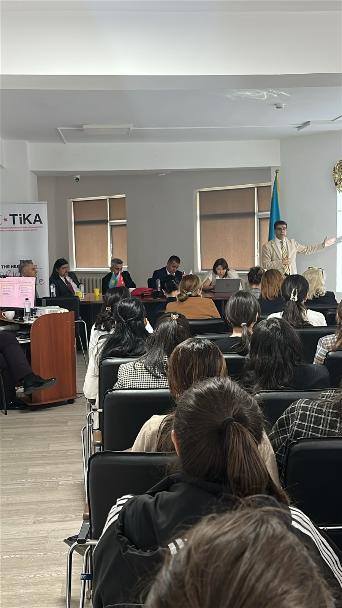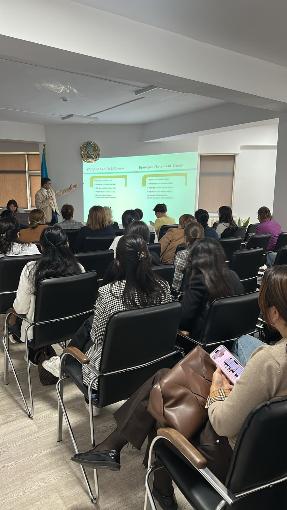
Astana hosted the three-day scientific and educational programme “Eastern Association of Paediatricians – TİKA”, bringing together more than 200 physicians, educators, young researchers and residents from Kazakhstan and Türkiye.
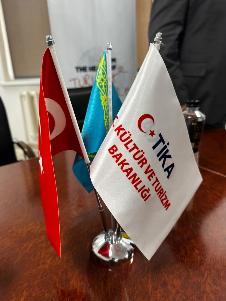
From 14 to 16 September, Astana hosted a major professional meeting that provided a platform for open scientific dialogue between paediatricians from Kazakhstan and Türkiye. The programme was organised by the Eastern Association of Paediatricians of Türkiye together with the Astana City Association of Paediatricians, with the support of the Turkish Cooperation and Coordination Agency (TİKA) as part of the “Nutrition, Growth and Development” project.
The programme was attended by Fuat Erdoğmuş, Coordinator of the TİKA Programme Coordination Office in Kazakhstan; Assoc. Prof. Dr. Serhat Samancı, Founder of the Eastern Association of Paediatricians and Chief Physician of Diyarbakır Children’s Hospital; as well as leading Turkish specialists - Prof. Ergin Çiftçi, Assoc. Prof. Osman Akdeniz, Prof. Çapan Konca, Prof. İlyas Yolbaş and Assoc. Prof. İsmet Rezani Toptancı.
The programme was built around a practical approach: rather than simply presenting modern methods, participants focused on how these approaches can be applied in real clinical practice.
The first day focused on infectious diseases, emergency care and intensive care. Participants discussed complex clinical cases involving sepsis and severe infections, cardiac rhythm disorders, rare fever syndromes and autism spectrum disorders.
The second day covered several areas, including respiratory medicine, cardiology, nutrition and neonatology. Topics included streptococcal infections, sleep and breathing disorders, the follow-up of children with congenital heart defects, nutritional support for patients with neurological conditions, respiratory therapy and the management of extremely preterm newborns.
The final day broadened the professional agenda, covering topics ranging from acute rheumatic fever and community-acquired pneumonia to rare diseases, RSV infection, eosinophilic gastrointestinal disorders and the organisation of paediatric intensive care. The programme concluded with an interdisciplinary discussion on the timely recognition of warning signs and ensuring continuity of medical care.
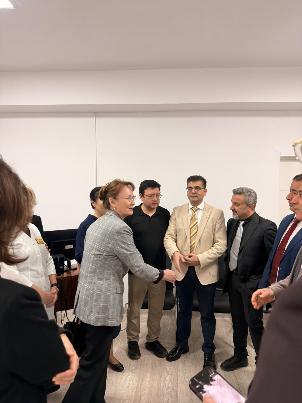
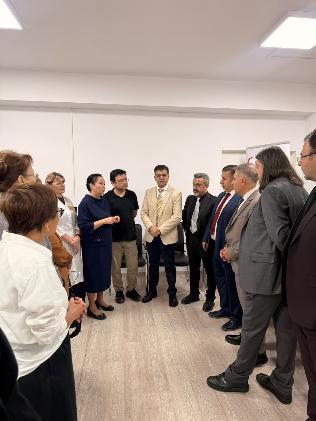
An important part of the visit was a meeting between the leadership of Astana Medical University and representatives of the Eastern Association of Paediatricians and TİKA. The parties discussed opportunities for further cooperation in medical education, research and clinical practice. Potential areas of collaboration include joint educational and research projects, academic mobility, exchanges of educators and experts, and support for young professionals.
The three-day programme therefore served not only as a platform for sharing knowledge and clinical experience, but also as an opportunity to build new professional connections. Kazakhstan and Türkiye continue to strengthen cooperation in paediatrics by bringing together scientific expertise, clinical experience and educational opportunities.