
EXAM ANXIETY
A Self-Help Guide for Medical University Students
Psychological Services • Astana Medical University
Part 1: What Is Exam Anxiety?
Exam anxiety is a natural stress response that occurs before, during and after exams. In medical school it is especially prevalent: high stakes, vast amounts of material, and the awareness of future responsibility for patients create additional pressure.
Moderate nervousness is your ally — it mobilises the brain and sharpens focus. The problem arises when anxiety becomes intense, persistent and starts to impair studying and performance.
Why Does It Happen?
• Perfectionism: 'I must know everything perfectly or I'm a bad doctor'
• External pressure: expectations from family, faculty, and society
• Past failures that erode self-confidence
• Overwhelming volume of material — a sense of helplessness
• Fear of making mistakes in a profession involving human lives
• Disrupted sleep, poor nutrition, no time to recover
Symptoms: Check Yourself
Symptoms may appear before, during, and/or after an exam.
Emotional
• Nervousness, worry, feeling overwhelmed
• Panic or panic attacks
• Feeling helpless ('I don't know anything')
• Shame or guilt
Physical
• Increased heart rate
• Muscle tension (neck, shoulders, jaw)
• Nausea and/or digestive changes
• Fatigue without physical exertion
• Increased sweating, clammy hands
• Difficulty breathing or chest tightness
• Loss of appetite or overeating
• Insomnia, waking at night
Cognitive (Thoughts)
• Difficulty concentrating — thoughts scatter
• Difficulty recalling information — 'mind goes blank'
• Intrusive thoughts ('What if they ask something I didn't study?')
• Irrational thoughts ('If I fail, my career is over')
• Constant comparison with classmates
• Remembering answers only after leaving the exam room
Behavioural
• Cramming all night before the exam
• Withdrawing from others, social isolation
• Procrastinating and avoiding exam-related tasks
• Making simple mistakes due to stress
• Wanting to skip the exam entirely
• Excessive caffeine or energy drinks
Part 2: Thinking Traps
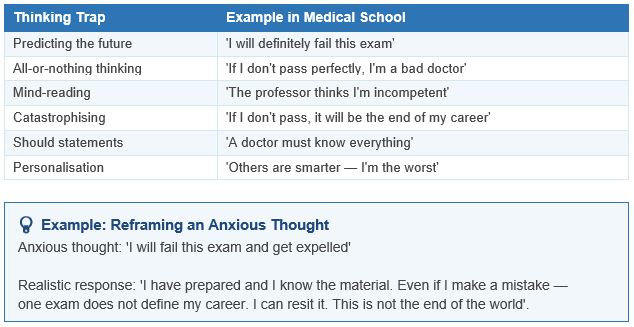
Under stress, the brain starts distorting reality. Here are the most common traps in medical students:
Part 3: Practical Strategies
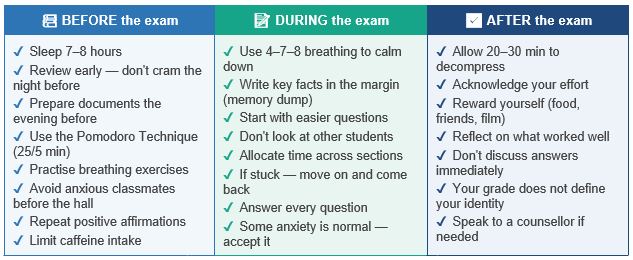
Breathing Techniques
4–7–8 Technique: Inhale for 4 counts → hold for 7 → exhale for 8. Repeat 4–5 times. Reduces anxiety within 60–90 seconds.
Diaphragmatic breathing: Place a hand on your abdomen. Breathe into your belly, not your chest. 5–7 minutes lowers cortisol levels.
5–4–3–2–1 Grounding: Name 5 things you can see; 4 you can hear; 3 you can touch; 2 smells you can notice; 1 taste you can sense. Breaks the anxiety spiral just before an exam.
Dealing With Concentration Problems
• Pomodoro Technique: 25 min work — 5 min break × 4 cycles (avoid checking your phone during breaks — the brain needs to truly switch off)
• Put your phone away — even vibration reduces focus by 20%
• White noise or instrumental music without lyrics
• Write down distracting thoughts on a 'later' list and return to work
• Start with the easiest task — it draws you into the process
• One task at a time — multitasking reduces effectiveness by 40%
Part 4: Study Strategies
Planning
• Begin revision 2–3 weeks before the exam, not the night before
• Break material into topics and spread them across days
• Alternate subjects and take breaks every 45–50 minutes
Active Learning
• Explain topics in your own words — better than re-reading
• Draw diagrams and mind-maps for clinical algorithms
• Practise clinical cases and MCQs — don't just read
• Use spaced repetition (Anki) for medical terminology
Self-Care During Exam Season
• Sleep is a priority: 7–8 hours consolidates memory better than cramming
• 20–30 min of physical activity per day demonstrably reduces anxiety
• Spend time with friends outside of studying — it is not wasted time
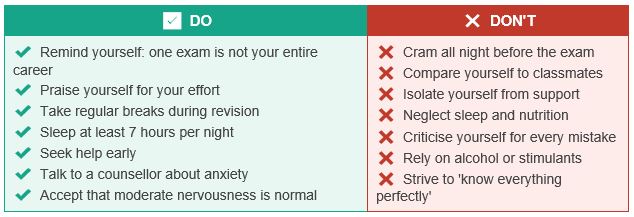
Part 5: Do's and Don'ts
Part 6: When to Seek Help
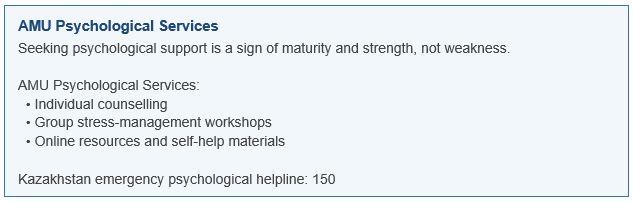
Speak to a professional if:
• Anxiety prevents you from studying or sleeping for more than 2–3 weeks
• You notice signs of depression: apathy, loss of interest, emptiness
• You have thoughts of not wanting to continue studying or living
• You are using alcohol or substances to cope with stress
One exam does not define your career or your worth as a person.
You did everything you could — and that is enough.
Psychological Services • Astana Medical University